

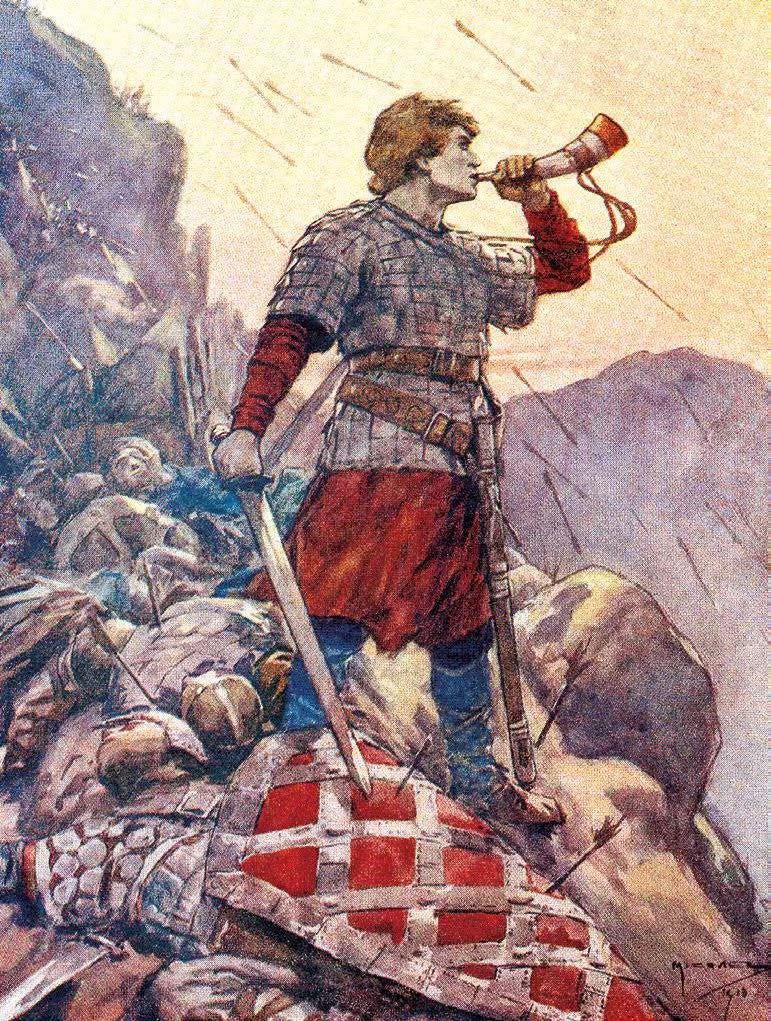
When I first began my study of chivalry, I remember being surprised to learn that one of the great scholars of the ideal was no fan of the Round Table—and even lays some blame for the demise of chivalry on Arthurianism. But the more I think of it now, the more sense it makes.
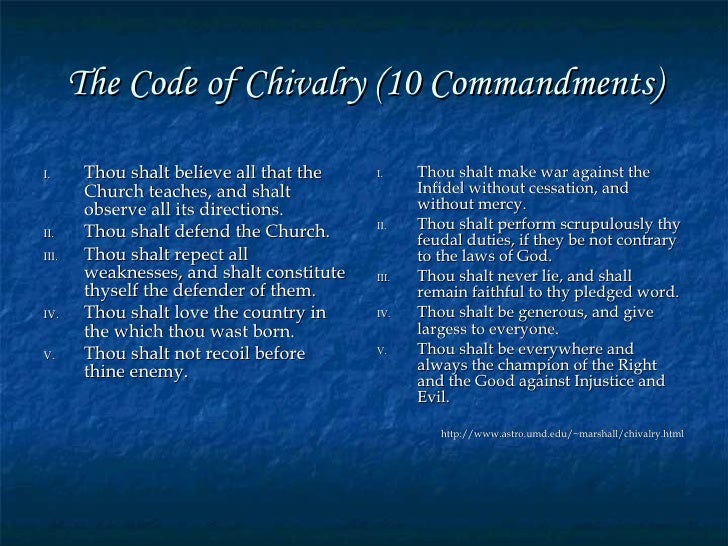
Leon Gautier was a 19th century archivist and literary historian who wrote a classic tome called Chivalry: The Everyday Life of the Medieval Knight. The book is required reading for all Sensitive Young Men with a medieval longing and features the Ten Commandments of the Code of Chivalry:
More to the point of this essay, Gautier takes pains to distinguish Carolingian chivalry from Arthurian chivalry.
Carolingian chivalry is the essentially French version, and its mythos is the chansons de geste (“songs of great deeds”) involving Charlemagne and his paladins—the most famous of which is The Song of Roland. Carolingianism is about war and God. It is the chivalry, Gautier writes, of the “11th and 12th centuries—that of the crusades, that of our [epic poetry]. It will appear rude and barbarous to some people, but in truth is strong and healthy, and has formed for us the powerful race whose glory has filled the world.” Roland and company don’t have much time for the finer points of etiquette and don’t dedicate themselves to idealized romantic love; they are too busy fighting Saracens and protecting Christian civilization.
As for the more popular Arthurian or English chivalry, Gautier has less fond things to say. He writes:
The romance of the Round Table spread amongst us the taste for a less wild but also a less manly chivalry. The elegancies of love in them occupied the place formally reserved for the brutality of war and the spirit of adventure in them extinguished the spirit of the crusades. One will never know how much harm this cycle of the Round Table inflicted on us. It’s civilized us no doubt; but effeminated us. It took away from us our old aim, which was the tomb of Christ gained by blood in battle. For the austerities of the Supernatural it substituted the tinsel of the Marvelous. It is to this dangerous but charming literature that we owe for theatrical, the boastful, rash chivalry which proves so fatal during the Thirty Years’ War.
This kind of chivalry also gives birth to the satires of Cervantes and company, which aren’t making fun of paladins defending Christendom but instead the errant knights roaming the countryside looking for damsels to rescue. “And we must confess,” Gautier notes, “that some complaints of the great satirist are not without foundation.”
The place of women is key in the eventual triumph of Arthurian chivalry. “The ladies decided it,” Gautier writes.
Sensual and light, witty and delicate, descriptive and charming, these pleasing romances are never masculine, and become too often effeminate and effeminating. They sing always, or almost always, the same theme. By lovely pastures clothed with beautiful flowers, the air full of birds, a young knight proceeds in search of the unknown, and through a series of adventures whose only fault is that they resemble one another somewhat too closely.
His criticism is probably a little overcooked. The best works of the Arthurian Cycle—like Sir Gawain and the Green Knight—offer criticism on this very decline. And it becomes a little more complicated when one notes that Arthurian chivalry has heavy French influences. But Gautier is clearly on to something. Ladyfolk are not featured nearly as prominently in The Song of Roland, nor are there many elegancies that would appeal to them. It’s not until the end, as Charlemagne returns home without his rearguard, that the reader learns of Roland’s engagement to the Lady Aude (who like a faithful lover dies upon hearing what happened to her knight at Roncevaux Pass!). But from Roland we hear not a word about romantic love. The final hours of his life are filled with lamentations over many things, including the fate of his sword—nothing of his lady, though.
These were Roland’s priorities, charmingly (almost comedically) boyish and innocent, especially in comparison to the stereotypical Knight of the Round Table. He was not a lover dressed up in chainmail. He was a Christian warrior, and his form of chivalry was for boys (of all ages).
Here the teachings of Gautier and the Carolingian chivalrists almost coincide with the teachings of the more advanced redpill gurus and puas who often use chivalry and White Knight as terms of derision. (To be clear, most of these guys are idiotic, but some have important things to say; I’ve long wanted to write an essay on what a chivalrous young man can learn from Chateau Heartiste.) Glorious as it is, Arthurianism contains its own demise: after the work of reclaiming the realm of Logres from wicked men has been more or less achieved, knight errants tend to lose their way. They tend to become White Knights, otherwise known as by one of the most derisive terms in contemporary usage: SIMPS.
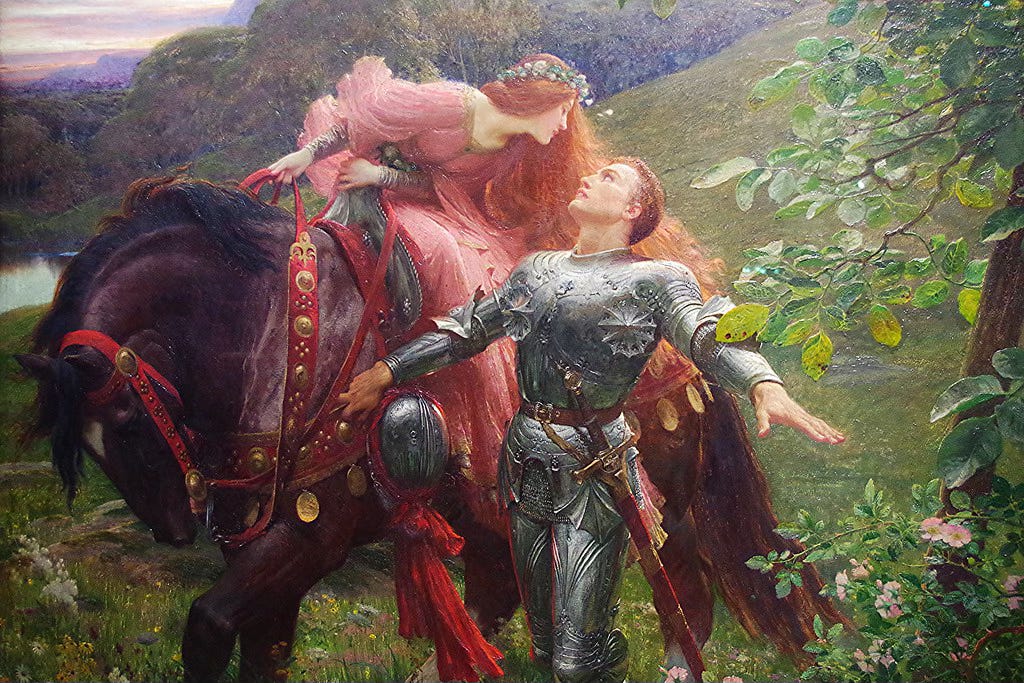
Nor can this female-focused “chivalry” even serve the interests of ladyfolk. In their heart of hearts, women don’t actually like the guy who models himself after the romance novel “knight,” bending over backwards to satisfy her whims. Women instead love Roland, the warrior who has higher priorities than romance.
That’s not to say that the Carolingian chivalrists have this problem completely figured out. It’s not at all clear how Charlemagne and the paladins would maintain martial discipline and excellence after defeating those external threats—the ones who made discipline and excellence so necessary in the first place. But the Carolingian form of chivalry at least does not glamorize its own decadence.
Chivalry for boys (of all ages) is the only kind of chivalry that can endure, one that is fixated on prowess, honor, and faith (the three virtues that Geoffroi de Charny encourages most eagerly). This lesson is written into the St George legend as well, the point of which is the killing of dragons and the saving of cities, not romantic soulmate salvation. After killing the dragon, George declines the rich offerings of the King of Silene (half of his kingdom and presumably his daughter’s hand in marriage) and instead rides off to his next adventure.
This debate over Carolingian vs Arthurian chivalry is not a merely academic one. If you want a muscular Christian ethos, then it has to favor Roland over Lancelot. For better or worse, we have enough existential threats before us now that the Carolingian form will be called forth more urgently than the Arthurian one.
Related:


Also my book…
A friend of mine recently launched a project. Check it out if you’re interested. Pretty impressive one-stop shop for digital books and audiobooks available for free. Premium option available too. Note: this is not a paid sponsorship; I am genuinely impressed with his project and want to help get the word out.

I keep writing this in comments: Chivalry was never meant for women, it was meant to make boys into men and men into Warriors, literal Knights for the battlefield. It was an ascetical lifestyle, a wholly Christian one focused on Love of Virtue (Christ), rejection of worldly temptations, and Defense of Nation and Neighbor (Tribe), Protection of the Innocent.
Dox Quixote was a scathing critique of the Romance Novel and the corruption of Chivalry to mean some sap who simps for females.
Even Arthurian legend declined through this pattern; it wasn’t always this way. The old King Arthur was a warrior who slew witches and giants, and who laughed as he fought. This was when he was a purely British figure, and as continental influence seeped in he declined. Arthur lost his agency. He stopped questing and left the quests to his Round Table, over which he presided as its most lethargic member. The former world-conqueror succumbed to the cuckoldry for which he is so infamous.
Britain, and to a lesser extent England, used to have their own heroic counterparts to Roland. But they also got feminized. It explains why Tolkien took the attitude he did towards knights and chivalry when writing the Lord of the Rings. Despite being full of legendary quests and great medieval warriors, you’ll find very few knights and no continental chivalry contained within.